


A logo is never just a drawing: it is a symbol capable of condensing identity, values and personality into a single image. Throughout history, human beings have used visual signs to represent themselves, differentiate themselves and communicate who they are. Today, more than ever before, we see this in every corner of our daily lives: on websites and social media, on product packaging or on the façade of a shop; we are, in fact, surrounded and overwhelmed by logos.
One thing is certain: the logo has become one of the most important elements of graphic design and brand identity. In just a few seconds of attention, a person can recognise a company, recall an experience or associate certain values with a brand. This ability, however, did not appear out of nowhere: it is the result of centuries of visual, cultural and technological evolution.
From the earliest symbols used by ancient civilisations to the minimalist icons of the digital world, the history of the logo is also the history of how societies have learned to communicate through images.
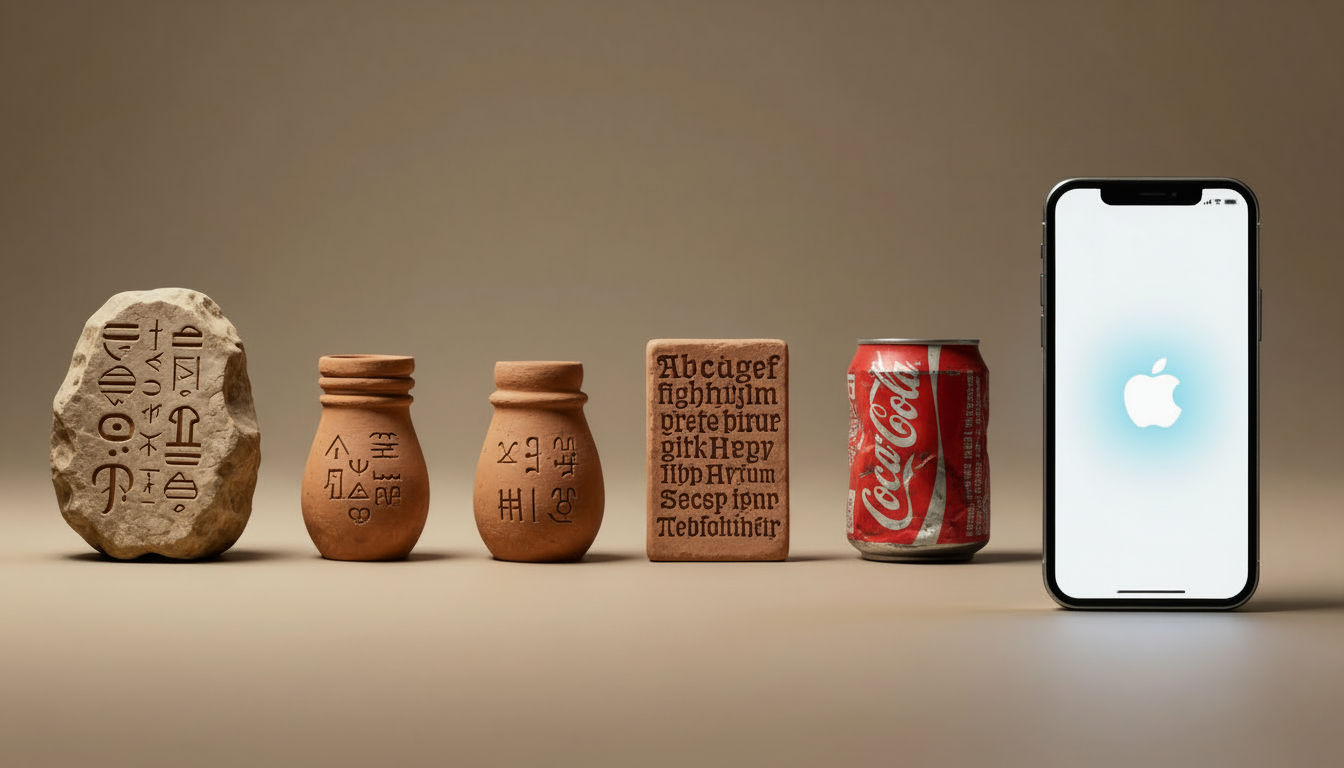
The Origins of the Logo: Symbols Before Branding
Although today we mainly associate logos with companies, products or commercial brands, the need to represent identity through visual symbols is much older. It dates back to the earliest organised civilisations, where societies began to develop graphic systems capable of communicating power, belonging, authority or origin — long before the modern concept of branding existed.
Throughout history, these visual signs have gradually evolved from rudimentary symbolic forms into increasingly complex identity systems, where images, shapes and graphic compositions served to identify communities, institutions or individuals within ever more structured social contexts.
Symbols in Ancient Civilisations
In ancient civilisations, visual symbols played a fundamental role in conveying cultural, religious and political meanings. They allowed complex ideas to be condensed into easily recognisable signs within a community.
In Ancient Egypt, for example, hieroglyphs were not only a writing system but also symbolic representations linked to deities, institutions or figures of power. Certain signs acquired an identifying value that went beyond their linguistic function.
Similarly, in Greek and Roman civilisations, monograms, emblems and distinctive marks were used on coins, banners and public buildings. These symbols made it possible to identify rulers, cities or institutions while conveying prestige, authority and legitimacy.
In these contexts, imagery did more than communicate information — it helped construct a visual narrative of power and belonging, one that could be recognised even by those who did not share the same language or level of literacy.

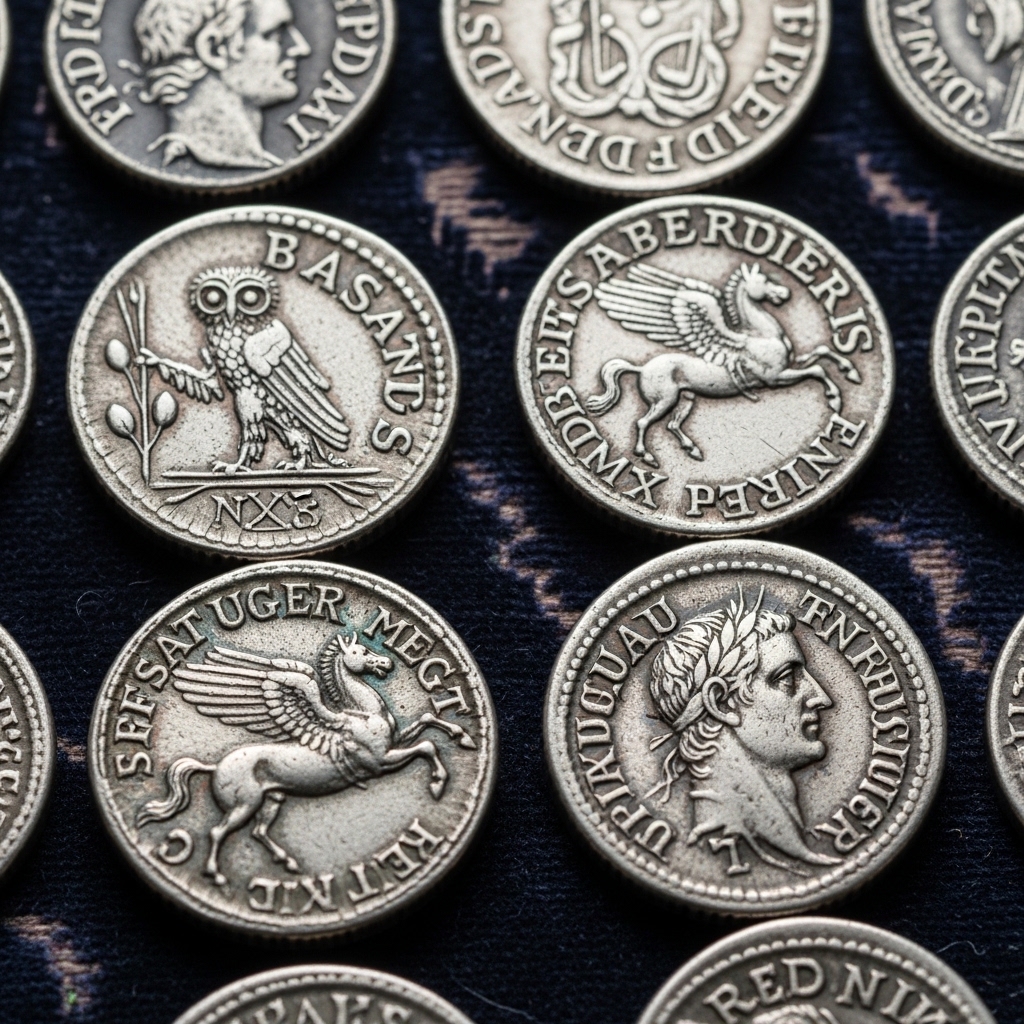
Craft Marks and Trade Symbols in the Middle Ages
Over the centuries, these symbolic systems evolved into forms increasingly similar to what we now understand as visual identity, particularly during the Middle Ages. At this time, the growth of markets and commercial activity created a need to distinguish products and trades within increasingly dynamic economic environments.In this context, many artisans began using personal marks, which they engraved or stamped onto their creations. Potters, blacksmiths, printers and weavers, for example, could identify their work even when it travelled beyond its place of origin.
These marks, found on ceramics, metal, paper or textiles, functioned as a kind of visual signature that allowed an object to be linked to a specific maker. This made it easier to build reputation and trust between merchants and buyers. Although these signs did not yet follow a branding strategy in the modern sense, they anticipated one of the fundamental principles of logo design: the ability of a graphic symbol to represent a recognisable identity and create a stable mental association between a visual sign and a specific origin.
Heraldic Coats of Arms and Systems of Visual Identity
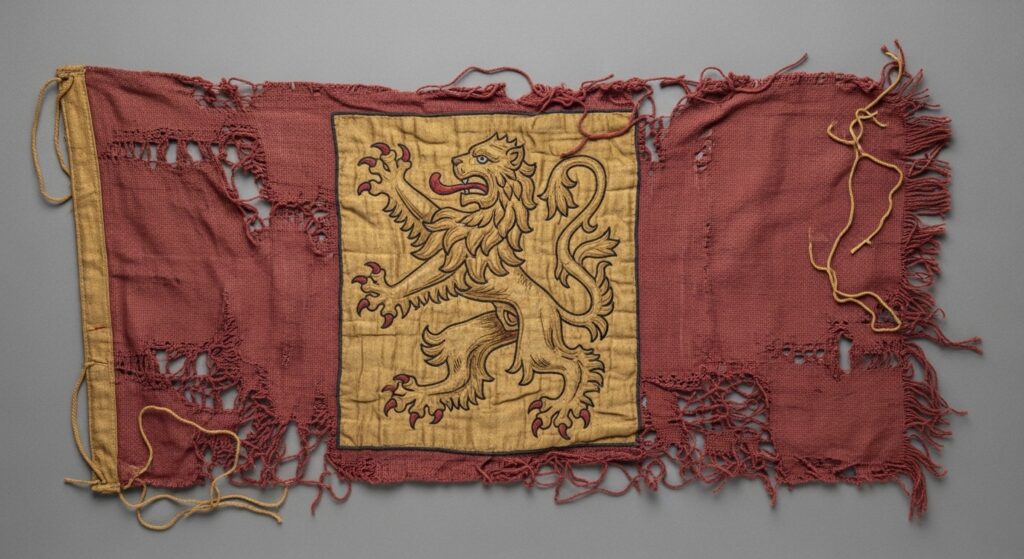
Alongside the development of these artisan marks, heraldic coats of arms used by European nobility became one of the most sophisticated systems of visual identity before the emergence of modern branding. Heraldry combined colours, animals, geometric shapes and other symbolic elements within highly codified compositions, capable of telling the story of a lineage, expressing family alliances or indicating the social status of a noble house.
Although these systems were not linked to companies or commercial products, their communicative function was remarkably similar to that of modern logos. They allowed for the rapid identification of a family, institution or territory through a coherent set of visual signs reproduced on shields, flags, official documents and architectural elements. In this sense, heraldry can be considered one of the clearest predecessors of contemporary visual identity systems, as it established rules for composition, colour and symbolism that had to remain consistent to ensure immediate recognition.
Taken together, all these examples show that, long before branding emerged as we know it today, human societies had already developed complex symbolic systems using images, signs and graphic compositions to communicate identity, belonging and collective recognition. These systems laid the cultural and visual foundations upon which modern logo design would later be built.

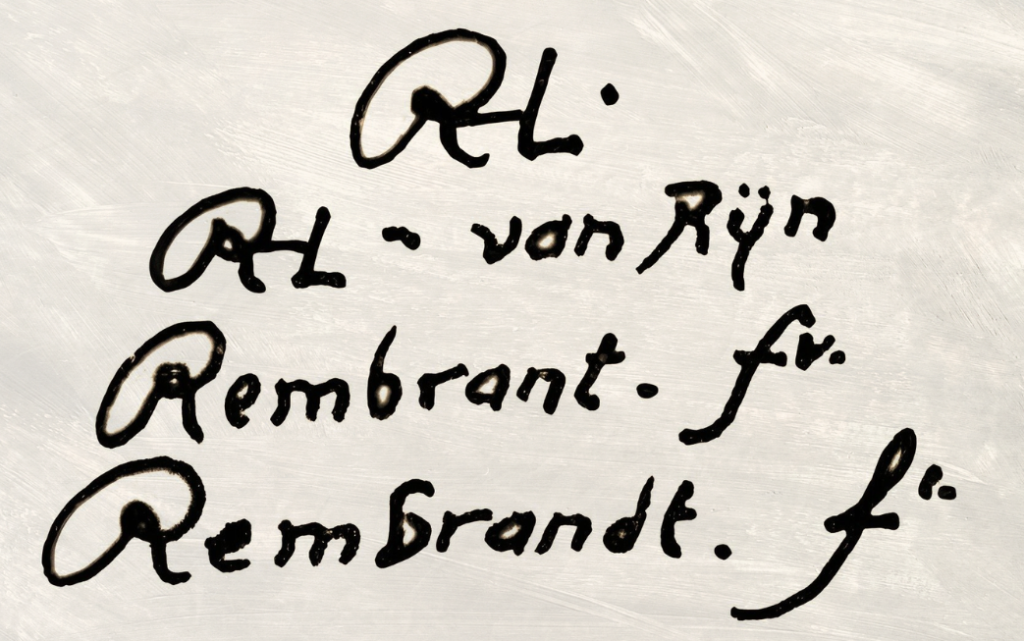
The Signature as Personal Branding: The Case of Rembrandt
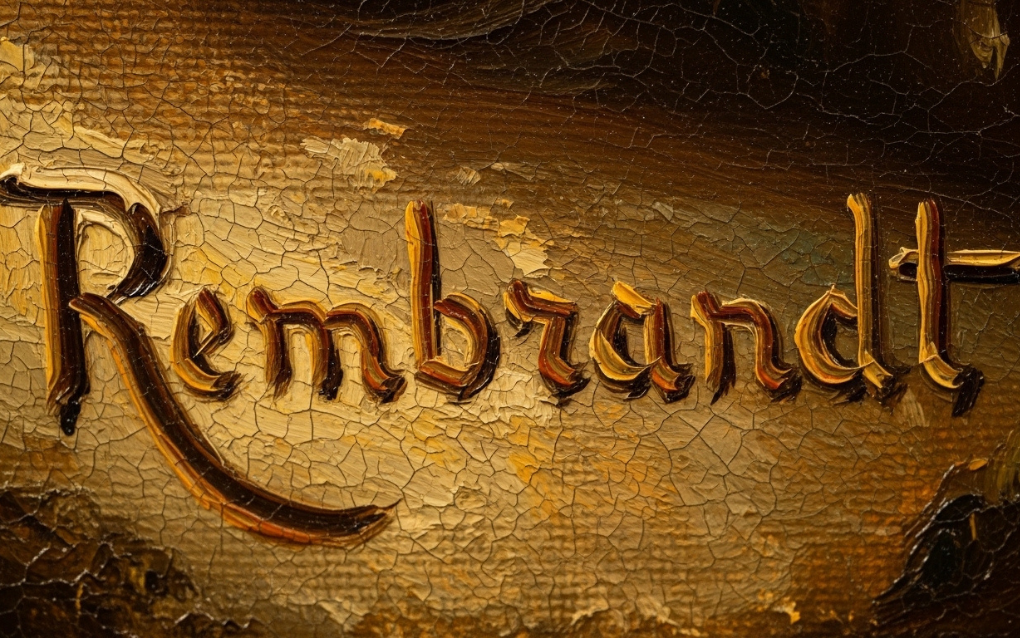
Long before the modern concept of branding existed, some artists already understood that authorship could be expressed not only through their work, but also through a recognisable visual sign that functioned as a true identity. The case of the Dutch painter Rembrandt is particularly revealing, as throughout his career he used different forms of signature that gradually evolved into a kind of personal brand.
In his early years, he used relatively simple monograms, such as the initial “R” or combinations like “RH” (Rembrandt Harmenszoon), to which he later added the letter “L” to indicate his birthplace, Leiden, creating the monogram “RHL”. Over time, however, the artist abandoned these abbreviated systems and began signing his works simply with his name, “Rembrandt”. This was a significant decision, as it not only simplified author identification but also reinforced the uniqueness of his artistic presence in the market of his time.
Although his signatures changed over the years, certain visual features — particularly the dominant presence of the letter “R” and the expressive character of the strokes — maintained a graphic consistency that made them easily recognisable. In practice, his signature functioned much like a personal logo.
In a sense, centuries before modern branding formalised its principles, Rembrandt had already understood that a name written with a distinctive graphic personality could become a powerful form of identity.
The Industrial Revolution and the Birth of Brands
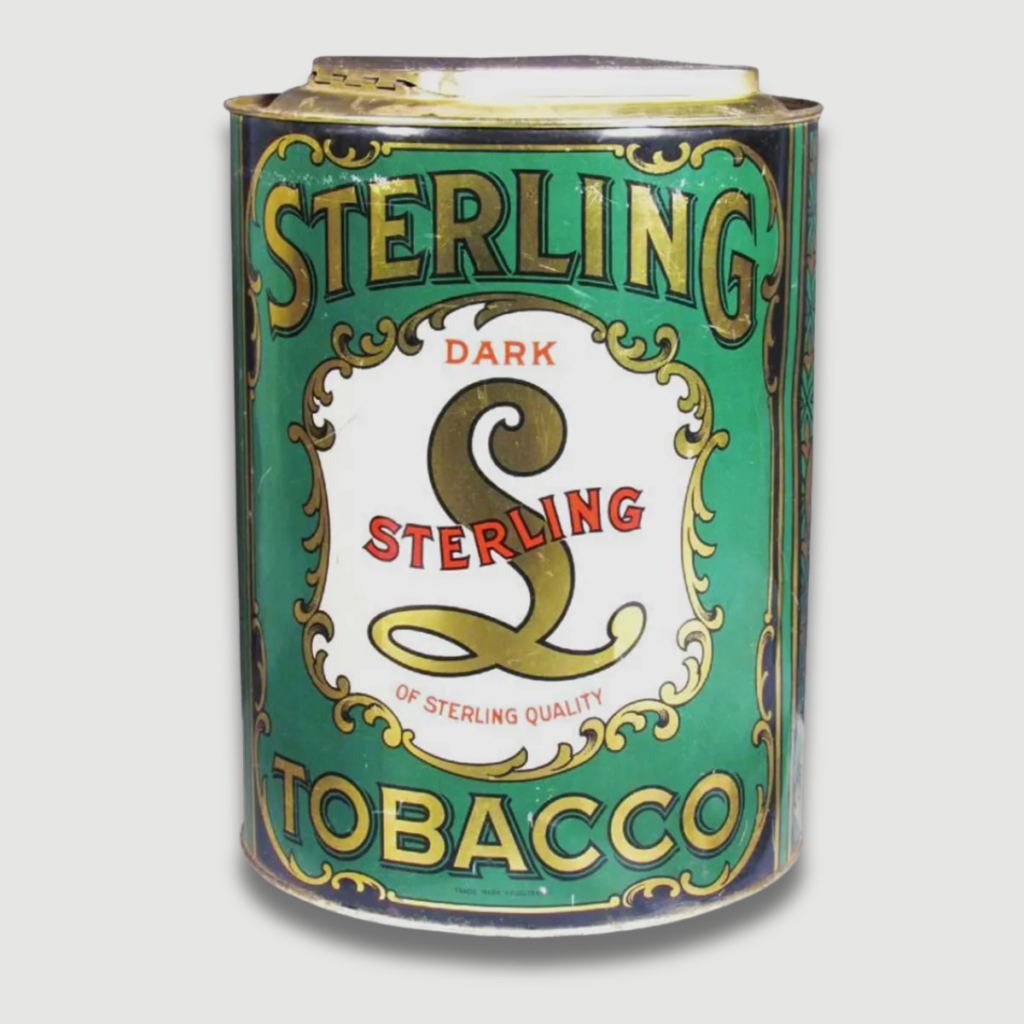
The true transformation that led to the modern logo began during the Industrial Revolution, a period in which mass production, expanding markets and new trade networks profoundly changed how companies produced, distributed and presented their products to consumers. As goods began to circulate on a much larger scale and across wider territories, companies faced a new challenge: the need to differentiate their products in increasingly saturated markets, where origin and reputation could no longer be communicated solely through direct relationships between producer and buyer.
In this context, the concept of the trademark gradually emerged — understood as a sign capable of identifying a product and linking it to a specific company, while also ensuring a sense of consistent quality and recognition among consumers. Graphic symbols, which had previously served mainly as artisan marks or institutional emblems, began to play a central role in building this commercial identity, as they allowed products to be quickly recognised even when far from their place of origin.
The Birth of the First Registered Trademarks
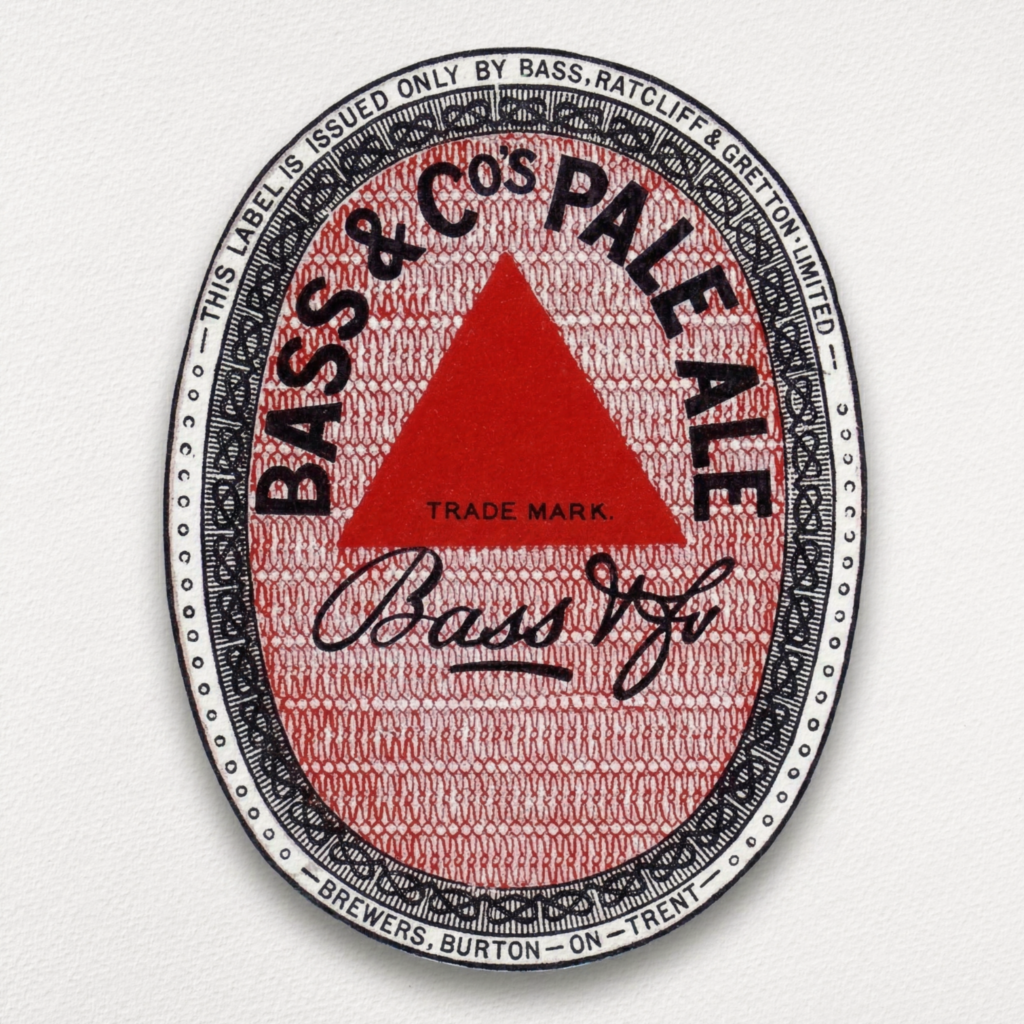
One of the most emblematic moments of this transformation occurred in 1876, when the red triangle of Bass Ale became one of the first logos officially registered as a trademark in the United Kingdom. This symbol — simple yet highly recognisable — was designed to distinguish Bass beer bottles in an increasingly competitive market, where producers needed clear visual cues to help consumers identify their products among many others.
The emergence of registered trademarks marked a turning point in the history of design and business communication. It established the idea that a company could legally own a visual symbol representing its identity in the marketplace. From that moment on, the logo ceased to be merely a mark of origin and became a strategic tool for differentiation, capable of conveying reputation, recognition and continuity within an increasingly complex economic system.

The Impact of Urbanisation on Commercial Identity
As cities grew rapidly during the Industrial Revolution, urban markets became saturated with similar products, forcing merchants to find innovative ways to stand out. Visual identity became a key tool not only for attracting attention, but also for communicating trust, origin and quality in environments where consumers no longer knew the producer personally. This shift clearly shows how social and urban transformation directly influenced the need for recognisable and consistent symbols, anticipating many of the practices we now associate with modern branding.
The Birth of Modern Logo Design
As the 20th century progressed, the development of advertising, corporate communication and mass media profoundly transformed the way companies approached their public image. As a result, the logo began to occupy a central role within visual identity strategies.In this new context, logo design moved beyond a purely functional task and became a creative and strategic process, where form, colour and typography were deliberately used to build a coherent and recognisable identity.
The Consolidation of Graphic Design as a Discipline
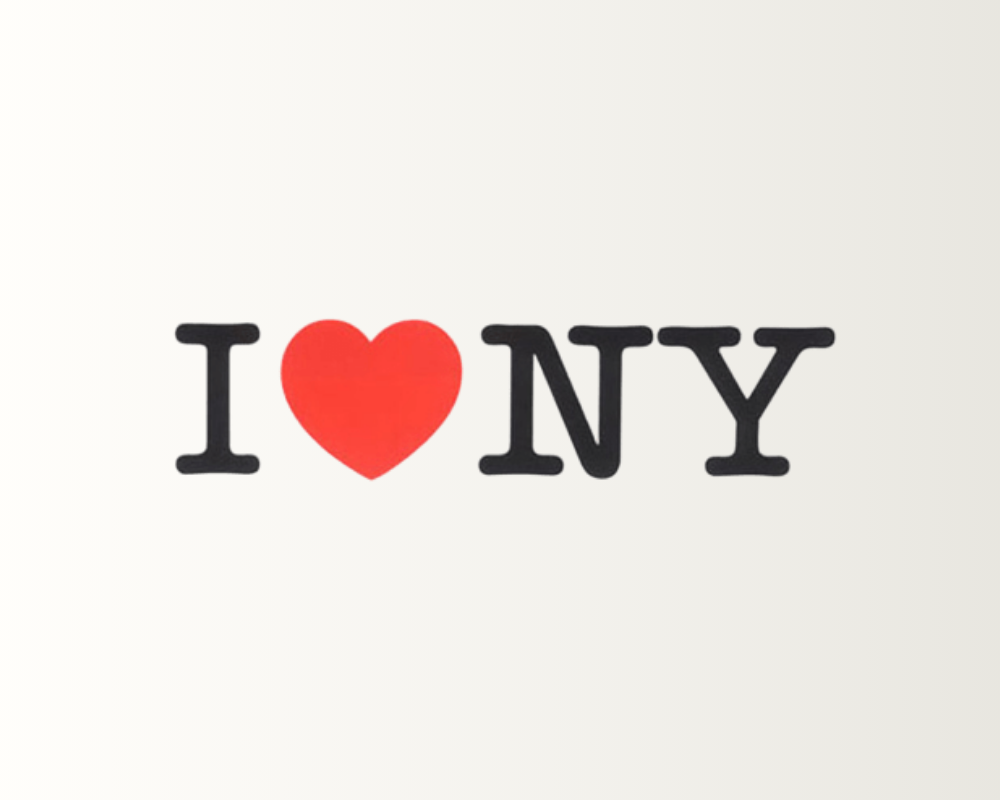
During this period, graphic design emerged as an independent professional discipline, driven by designers who understood visual communication as a structured system of signs and meanings. Figures such as Paul Rand, Saul Bass and Milton Glaser played a fundamental role in this transformation. They introduced a new way of thinking about logos, not as decorative illustrations, but as conceptual symbols capable of representing an idea, a company or a vision.
The logo of IBM, designed by Paul Rand, is one of the most iconic examples of this approach. It combines formal simplicity, typographic clarity and a strong visual identity that has remained recognisable for decades.
Projects like this demonstrated that a logo could become the core of a corporate identity system, where all visual elements — from advertising to packaging and signage — follow a consistent aesthetic logic.
From Complexity to Minimalism in Logo Design
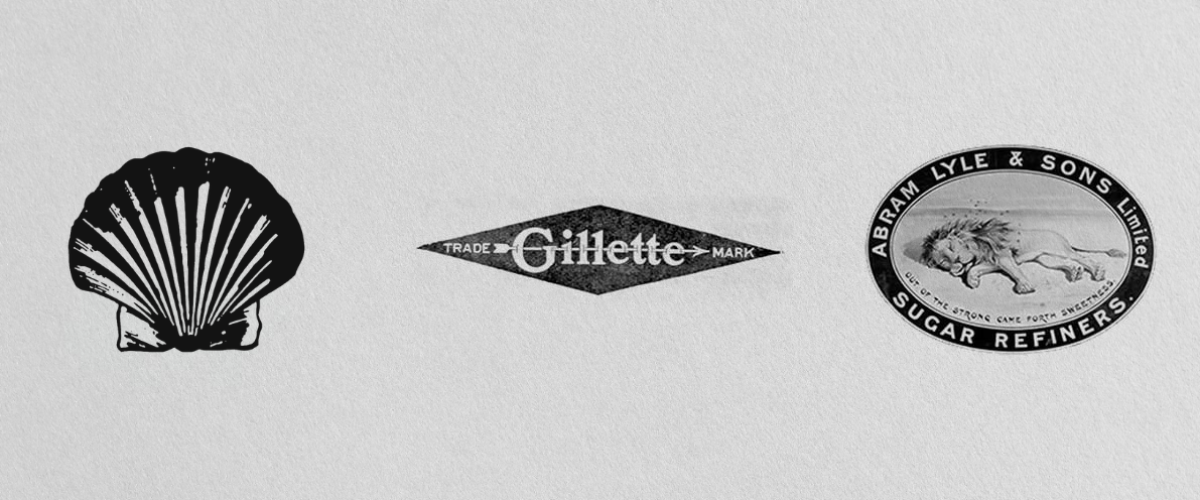
The first commercial logos that emerged during the 19th and early 20th centuries were often characterised by an ornamental and complex aesthetic, influenced by artistic styles such as Art Nouveau and Art Deco. Decorative typography, elaborate frames and highly detailed compositions formed part of the dominant visual language of the time.These designs reflected a context in which printing techniques and graphic aesthetics aimed to convey richness and sophistication.
However, as communication media began to expand, from print advertising to television and later digital environments, companies realised that overly complex symbols made reproduction more difficult and hindered immediate recognition.
Logos That Made History
Throughout the 20th and early 21st centuries, some logos have reached such a high level of recognition that they have become true cultural icons, identifiable even without the brand name. These symbols not only represent specific companies but also form part of the collective imagination of millions of people around the world.
Apple Inc.: From Narrative Illustration to Minimalist Symbol
The first logo of Apple Inc., designed in 1976 by Ronald Wayne, depicted Isaac Newton sitting under an apple tree, a complex scene that evoked scientific discovery and the spirit of knowledge. While rich in symbolism, its visual complexity made reproduction and immediate recognition difficult.
For this reason, in 1977 designer Rob Janoff created the now-famous bitten apple, a much simpler symbol that, over time, was progressively refined into the minimalist icon that represents the brand worldwide today

Nike: The Power of Simplicity
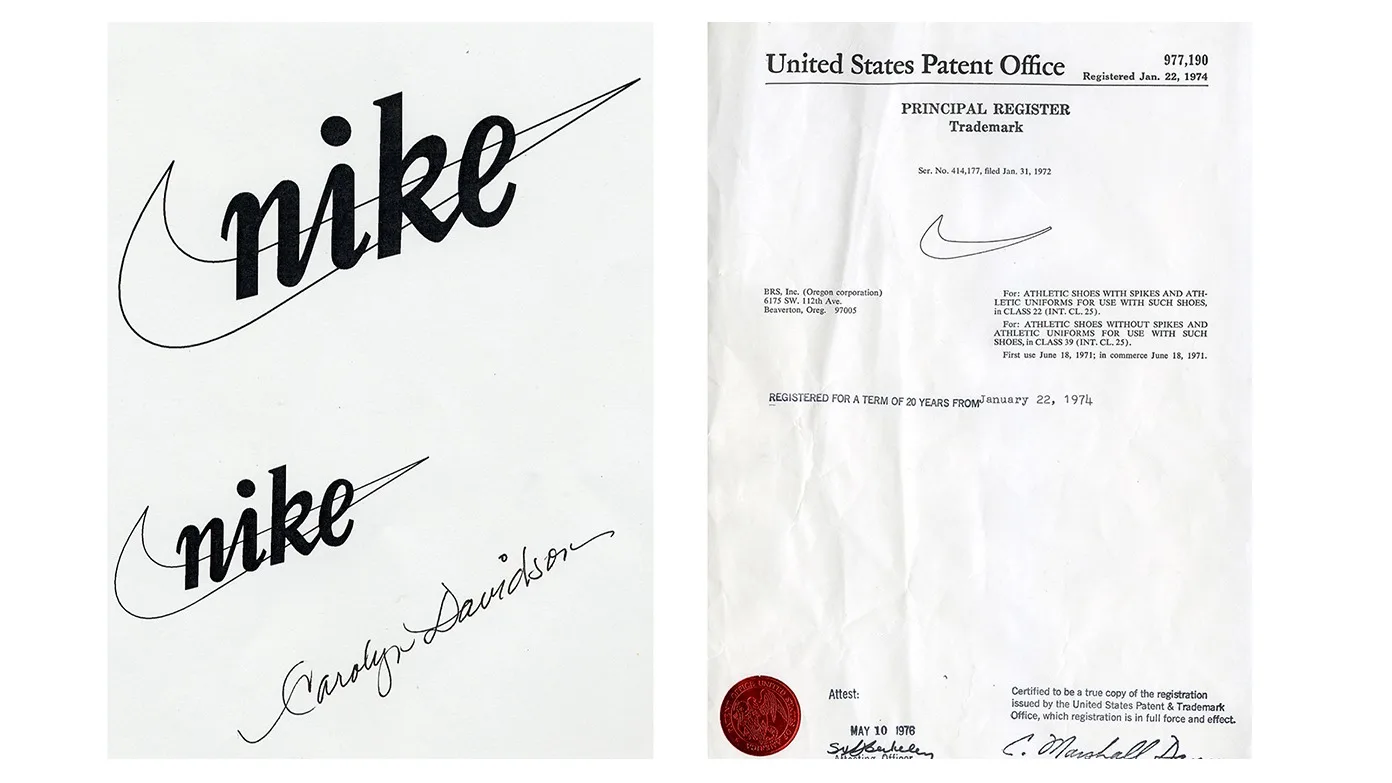
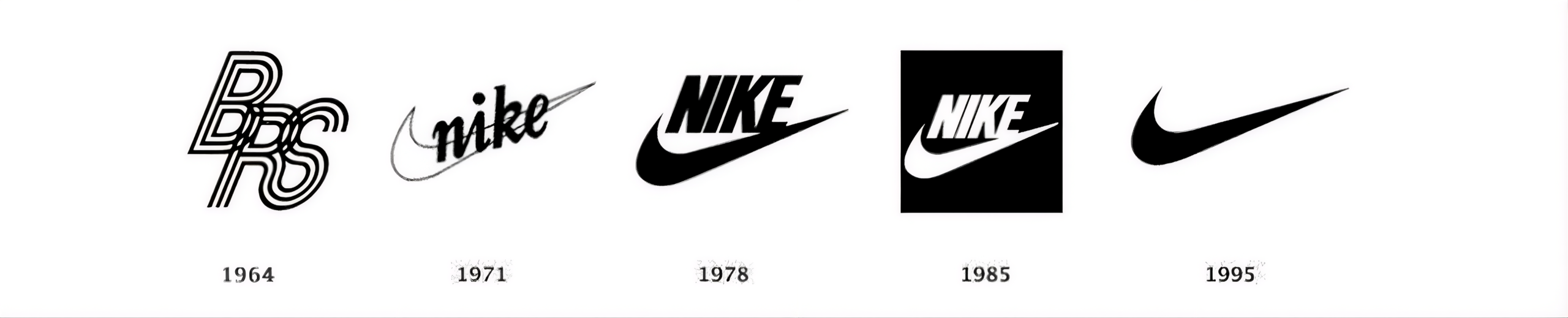
One of the most iconic examples in the history of logo design is the Swoosh of Nike, created in 1971 by design student Carolyn Davidson, who was paid just $35 for her work. Inspired by the wing of the Greek goddess Nike, the symbol conveys movement, speed and dynamism through a simple, fluid shape that can be recognised in any context.
Over time, this symbol became so powerful that the brand was able to dispense with the name “Nike” in many applications, demonstrating that a truly effective logo can function even without typographic support.
Throughout the 20th and early 21st centuries, some logos have reached such a high level of recognition that they have become genuine cultural icons, identifiable even without the presence of the brand name. These symbols not only represent specific companies, but also form part of the collective imagination of millions of people around the world.
McDonald’s and the Power of the Architectural Symbol
The logo of McDonald’s, globally recognised for its golden arches, has its origins in the architecture of the chain’s early restaurants. These buildings featured large arch-shaped structures designed to be visible from the road, helping attract passing customers. Over time, these architectural elements were transformed into a simplified graphic symbol, capable of representing the brand anywhere in the world.


Hidden Messages in Logos
One of the most fascinating aspects of contemporary logo design is the ability to integrate hidden meanings within seemingly simple compositions, using techniques such as negative space, visual associations and graphic metaphors.
The Use of Negative Space
A famous example of this technique is the logo of FedEx, where the empty space between the letters “E” and “X” forms a right-pointing arrow, a symbol that represents speed, precision and movement. Although many viewers do not consciously notice this arrow at first glance, its presence subtly reinforces the brand’s visual message.
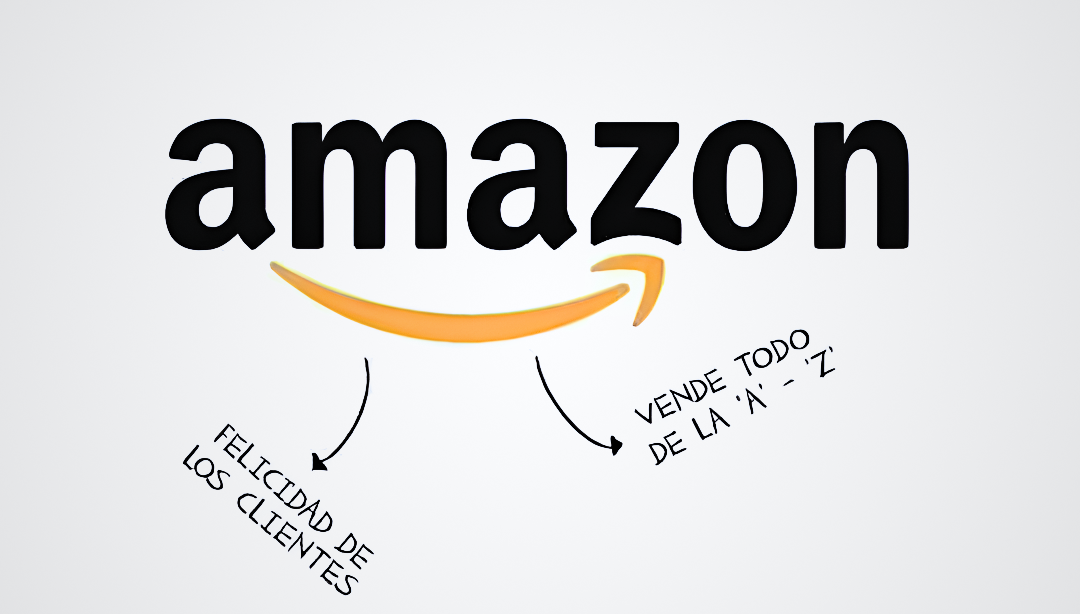
Another widely recognised example is the logo of Amazon, in which a curved arrow connects the letter “A” to the “Z”. This element symbolises both the wide range of products available on the platform and a smile, suggesting customer satisfaction.
Throughout the 20th and early 21st centuries, some logos have achieved such a high level of recognition that they have become true cultural icons, identifiable even without the brand name. These symbols not only represent specific companies, but also form part of the collective imagination of millions of people worldwide.
Subconscious Perception and Visual Strategy
Contemporary logo designers do not simply aim to create attractive symbols; they carefully study how the human mind interprets shapes, spaces and the relationships between visual elements. Techniques such as negative space, hidden arrows or forms that suggest movement work because they activate subconscious cognitive processes, reinforcing the association between a brand and certain values or sensations. This strategy allows a logo to communicate complex information instantly and without words, demonstrating that visual effectiveness depends not only on aesthetics, but also on psychology and human perception.
The Psychology of Logo Design
The success of a logo does not depend solely on its form or visual appeal, but also on how colours, shapes and typography influence the audience’s psychological perception. Over recent decades, studies in colour psychology and visual perception have shown that certain combinations can generate specific emotional associations.
The Meaning of Colours
Blue is often associated with trust, stability and professionalism, which is why it frequently appears in logos of technology or financial companies. Red, on the other hand, conveys energy, urgency and passion. While, Green is commonly linked to nature, sustainability and growth.
These associations are not arbitrary; they form part of a shared visual language that allows brands to communicate values even before the consumer has read a single word.
Throughout the 20th and early 21st centuries, some logos have reached such a high level of recognition that they have become true cultural icons, identifiable even without the brand name. These symbols not only represent specific companies, but also form part of the collective imagination of millions of people around the world.

Logos in the Digital Age
With the expansion of the internet, mobile devices and social media, logo design has had to adapt to a completely new visual ecosystem, where symbols must work across multiple formats, resolutions and screen sizes. A contemporary logo needs to remain recognisable both on a large-scale billboard and as a mobile app icon, which has driven a general trend towards simplicity and visual clarity.
The Rise of Flat Design
Within this context, so-called flat design has gained enormous popularity. It is characterised by the use of solid colours, simple geometric shapes and the absence of three-dimensional effects, making logos easier to read and reproduce across digital environments.
The Future of Logo Design
Logo design continues to evolve alongside technology and media, opening up new possibilities for creating dynamic and interactive visual identities. In recent years, artificial intelligence has begun to play an increasingly important role in creative processes, enabling the generation of visual concepts, the analysis of design trends, and the exploration of colour combinations in an automated way.
While these tools can accelerate certain stages of the creative process, logo design still relies heavily on the designer’s intuition, visual culture and conceptual ability. Ultimately, it is the designer who must transform abstract ideas into symbols capable of communicating identity, values and meaning.
What Makes a Logo Work
Despite all the technological and cultural changes that have shaped the evolution of graphic design, there are still a few core principles that define an effective logo.
A good logo is typically characterised by three fundamental qualities:
Simplicity, allowing the symbol to be recognised instantly
Memorability, helping the audience recall it even after brief exposure
Versatility, ensuring it works effectively across different formats and platforms
When these elements are balanced successfully, a logo can become a powerful tool capable of representing a brand’s identity for decades.

More Than Just a Drawing
The history of the logo is, in essence, the history of how societies have learned to represent identity through images, evolving from the symbols used by ancient civilisations to the minimalist icons we see today on our digital devices. Over the centuries, these visual forms have shifted from simple marks of belonging to strategic tools of communication and differentiation, capable of condensing the essence of a company into a single image.
In a world saturated with visual information, the logo remains one of the most powerful tools for capturing attention, generating recognition and building trust. It proves that, even in the digital age, a well-designed symbol can communicate more than many words.